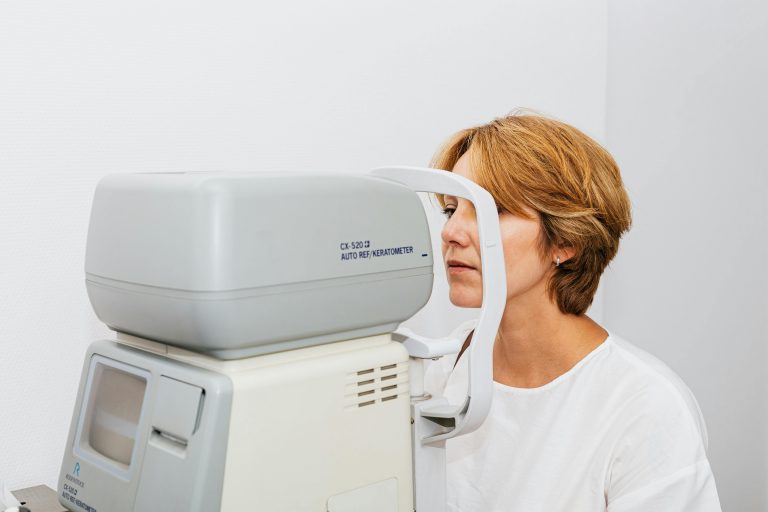
These FAQs explain what to expect from a comprehensive yearly eye exam with dilation at CustomEyes in the Houston area.
How is a comprehensive eye exam with dilation different from a basic vision check?
A comprehensive eye exam with dilation goes beyond updating your glasses prescription. By widening your pupils, we can examine the retina, optic nerve and blood vessels. That helps us detect early signs of glaucoma, macular degeneration, high blood pressure and diabetes. It protects both your vision and your overall health.
Will my eyes hurt or be uncomfortable during or after dilation?
Dilation itself is not painful. Most patients notice temporary light sensitivity and blurred near vision for a few hours after the drops. This is normal and expected. We recommend bringing sunglasses and, if you’re concerned about driving, planning extra time or arranging a ride.
How often should I schedule a comprehensive eye exam with dilation?
Most adults and children benefit from a comprehensive eye exam every year. Regular exams help us track changes in your vision and eye health. If you have diabetes or a family history of eye disease, we may recommend more frequent visits. Your doctor will discuss the best schedule for your needs at your appointment.
Can I drive myself home after a dilated eye exam?
Many patients can drive after dilation, but vision may feel blurry and light sensitive. If you feel unsure about driving, consider arranging a ride. At minimum, bring sunglasses and give yourself extra time before driving.
What should I bring with me to my comprehensive eye exam?
Please bring your current glasses or contacts, a list of medications and your medical and vision insurance cards. It also helps to bring any past eye records or a list of eye conditions in your family.